Cortisol Belly After 40? My Cousin Gave Up Coffee for a Month to Fix It. Here's What Happened to Her Waistline Instead
 Dana R., contributor — Comfort & Ease Co
If you've been watching the videos about cortisol belly after 40 and wondering whether your morning coffee is the reason your middle won't shrink, I want to tell you what happened to my cousin Gail. She believed it so completely that she poured her coffee down the sink for thirty days. Her waistline did not thank her.
Gail is 53. She's the bookkeeper at a car dealership in Lexington, the woman who knows where every dollar went and can't figure out where her waist did. Over the last three years she's added about twelve pounds, nearly all of it in a soft roll right above the waistband of her pants. Her arms and legs look the same as they did at 45. It's just the middle.
In August her phone started showing her the cortisol videos. Women her age pointing at their stomachs: "This is cortisol belly." Stress hormone, they said. Belly fat that won't move no matter what you eat. And the number one culprit, according to almost all of them? Coffee on an empty stomach. It "spikes your cortisol," and your body stores the fat right in front.

What thirty days without coffee did
Gail kept score, because that's who she is. Here's what her month looked like.
Week one: a headache that started behind her eyes on day two and didn't let up until day five. She was so foggy at work she transposed two numbers on a deposit and had to redo the whole thing.
Week two: the headache was gone, the tired wasn't. By 2:30 every afternoon she'd be standing at the dealership's popcorn machine, the one they keep for customers, eating it out of the little paper bags. "I needed something to keep me upright."
Weeks three and four: she was sleeping a bit better, she'll give it that. But she was snacking more at night, and the scale went up two pounds. The roll above her waistband hadn't moved an inch. On day thirty she made a pot of coffee at 6 a.m. and drank it standing at the counter "like a woman getting out of prison."
What cortisol actually does to your middle
Gail and I sat down and read about it properly, and here's the fair version. Cortisol is a real hormone, and it really does matter for the middle. When it runs high for a long time, from chronic stress, poor sleep, illness or certain medicines, the body tends to store more fat deep in the belly. That part of the videos is true.
But cortisol isn't supposed to be flat. It naturally rises in the morning, right around when you wake up, to get you going. That's normal and healthy. Coffee can nudge it up a little, especially in people who don't drink it often, but in regular coffee drinkers that bump tends to be small. Most women's "cortisol belly" isn't coming from a cup of coffee. It's coming from years of short sleep, a full plate of stress and a body going through the biggest hormone shift since puberty.
And here's the part the videos skip completely. When estrogen falls in your 40s and 50s, your body starts moving where it stores fat, away from the hips and thighs and toward the middle. That isn't a coffee problem. Taking away the one thing that got Gail through her mornings just made her tired, and tired women snack. Ask the popcorn machine.
If you've cut the coffee, cut the carbs and cut the stress where you can, and your middle is still the one place nothing changes, there's a short presentation that explains what happens in your fat cells in the first hour of the day. It's what made Gail stop blaming her mug.
See what your first hour is telling your middle →The clock inside your fat cells
This is the piece I wish somebody had put in one of those videos. Your brain isn't the only part of you that keeps time. Researchers have found that fat tissue runs on its own daily rhythm. Your fat cells have little clocks of their own, and those clocks lean toward storing at some hours and toward releasing at others.
Think about what that means for a woman like Gail. If there's a window early in the day when her fat cells are most willing to let go, she spent a month using that window to feel foggy and deprived, then made up for it at 2:30 with popcorn. She wasn't wrong to love her morning cup. She was wrong about what it was for.
How it got to Gail
It came from the service department, of all places. A customer named Bonita, a retired postmistress who brings her Buick in every three months like clockwork, was in the waiting room the week after Gail went back to coffee. She saw Gail pouring a cup and said, "Oh good, you're still drinking it. I thought those cortisol people got to you."
Bonita, it turned out, is down about fifteen pounds since spring, most of it from her middle, and she drinks coffee every single morning. She told Gail there was a video that explained why the first cup of the day matters more than the others, and one small thing she does with it. She wrote the web address on the back of her service ticket.
Gail watched it that night on the couch. She called me before it was even over.
I'm not going to try to explain what she does now. The presentation lays out the fat cell clocks, the research and the morning ritual much better than I could, and Gail would correct me anyway.
The bottle next to her coffee maker
When I visited in early October there was a small bottle next to her coffee maker, right where the hot-water-and-lemon mug used to sit. She caught me looking. "That's Bonita's part."
It's called FitSpresso. I only mention the name because so many of you write and ask what the women in my life actually use. Gail read me the back with her bookkeeper's voice, every item like a line on a ledger: green tea, L-carnitine, L-theanine, and a few others. What sold her was simple. It didn't ask her to give up her coffee. It went with it.
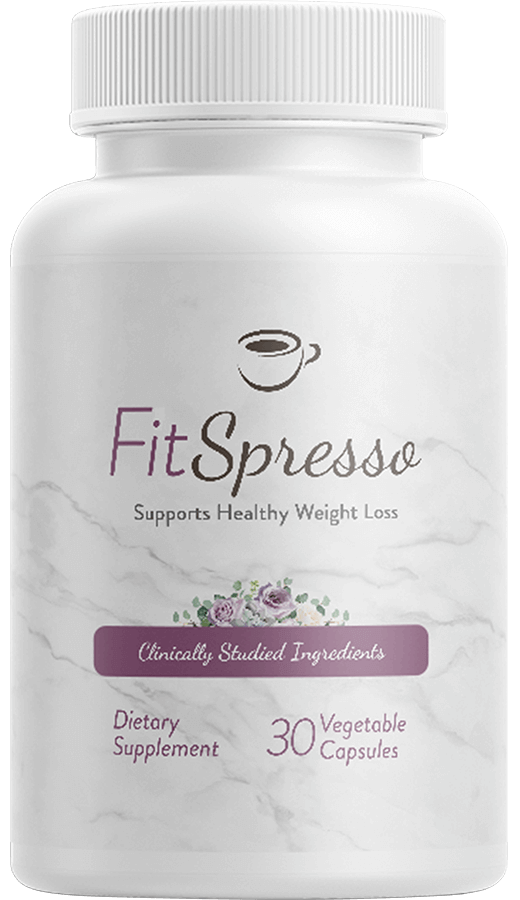
How the weeks went
Week one, coffee back, a real breakfast with it, and no 2:30 trip to the popcorn machine. She noticed that before anything else.
Weeks two and three, the nighttime snacking she'd picked up during the no-coffee month faded out. She didn't fight it. It just stopped calling.
A month in, the two pounds from the experiment were gone, plus one more.
Two months in, she's down eight pounds and the pants she'd been unbuttoning after lunch fit again. Slow, not magic. Your body takes time to trust you again after months of mixed signals. Results are different for every woman.
If you're the woman with hot water and lemon in her hand right now, missing her coffee and still pinching the same roll, it takes a few minutes to see what Bonita wrote on that service ticket.
Watch the presentation from the service ticket →What made Gail willing to try was the guarantee on their page: 60 days, money back if it doesn't work for you. "A month without coffee cost me two pounds and a bounced deposit," she said. "Two months of this costs me nothing if it doesn't work."
Who I think it makes sense for: women over 40 who love their coffee, who've cut back on food, sugar or caffeine and watched the middle stay put or grow. Who it isn't for: anyone who can't have caffeine, anyone pregnant or nursing, and anyone on medication who hasn't checked with her doctor first. And if your belly weight came on fast, with a rounder face, easy bruising, new stretch marks or high blood pressure, see your doctor, because a true cortisol disorder is a medical problem, not a coffee one.
Your first cup isn't the enemy. It may be the most useful thing you do for your middle all day. Gail spent a month throwing hers down the sink. Don't.
See what she does with her first cup now →P.S. Gail kept Bonita's service ticket. It's pinned to the corkboard over her desk at the dealership, under a sticky note that says "Do not quit coffee again." If you're on day three of no coffee with a headache behind your eyes, here's what was written on that ticket.
5 Morning Habits Real Women Over 40 Swear By
The small, unglamorous rituals that keep coming up in our reader stories — none of them cost more than a few dollars.
- What to do in the first 10 minutes after waking up
- The one thing to check before you reach for coffee
- A 2-minute ritual three readers mentioned, unprompted
- What "listening to your gut" actually means, medically
- The question to ask before starting anything new