Best Time to Drink Coffee for Weight Loss After 40? What My Friend's Reheated Mug Taught Me
 Dana R., contributor — Comfort & Ease Co
If you have ever typed "best time to drink coffee for weight loss" into your phone at 3 p.m. with a cold mug in your other hand, this one is for you. My friend Bev did exactly that in September, and then she texted me the screenshot with one word: "Seriously?"
Bev is 54. We sing alto next to each other in the church choir, and in the eleven years I've known her I have never once seen her without a coffee mug. Not a cup. A mug. The same one, all day. She pours it at 6:15, sips it until it goes cold, puts it in the microwave, sips it again, tops it off at ten, reheats it at noon, and is still nursing the last of it at four in the afternoon.
"I don't even drink that much," she told me. "It's two pots, spread out. It's my companion."
Bev has also gained about eighteen pounds since 48, almost all of it around her middle, and nothing she does seems to move it.
The study that made her put the mug down
At the end of August, a research team published an analysis of more than 11,000 American adults from a long-running national health survey. They didn't just ask how much coffee people drank. They asked when.
They split the coffee drinkers into two groups: people who drank their coffee mostly in the morning, and people who spread it out across the whole day. Then they compared both groups to people who didn't drink coffee at all, looking at metabolic syndrome, the cluster that includes belly fat, blood sugar and blood pressure creeping up together.
The morning drinkers were about 20 percent less likely to have it. The all-day sippers? No real difference from people who never touched coffee. And the pattern was a little stronger in women.
To be fair to the researchers, it was an observational study. It shows a link, not proof. Nobody is saying the morning cup melts anything by itself. But it asked the question Bev had never once thought about: what if the clock matters as much as the coffee?

What she had already tried (and why none of it stuck)
Bev isn't lazy and she isn't careless. Before any of this, she had already done what every magazine tells you to do with your coffee.
She switched to black. No more hazelnut creamer, no more two sugars. It saved her a couple hundred calories a day, and it may help a lot of women. On her scale it changed nothing she could see in two months.
She tried "proffee." Protein shake poured into her iced coffee, the way the videos show it. It kept her full until lunch. It also made her coffee taste like a vanilla milkshake left in a hot car, and the belly stayed exactly where it was.
She quit coffee completely for nine days. She had a headache from day two to day six, she snapped at her husband over a dish towel, and she ate more in the afternoons, not less. She went back to the mug on day ten and never told anyone but me.
Every one of those ideas can work for somebody. But they were all about what was in the mug. Not one of them asked when.
The part your search results won't tell you
When Bev searched that question, the answers she got were the polite ones. Coffee raises your metabolism a little. Don't drink it too late or it hurts your sleep. Watch the creamer. All true, and none of it explains why two women with the same mug can have completely different waistlines.
Here is the piece that is missing. Your brain is not the only part of you that keeps time. Researchers have found that fat tissue itself runs on a daily rhythm. Your fat cells have their own internal clocks, and those clocks decide, hour by hour, whether that tissue leans toward storing or toward releasing.
Think about what that means for a woman over 40. If there is a stretch of the day when your fat cells are most willing to let go, and you spend that stretch doing the same thing you do at 4 p.m., you are not using the window at all. You are just drinking coffee.
And here is the cruel part that Bev understood immediately: the harder she dieted, the more her body seemed to dig in. Eating less had trained her metabolism to be careful. The clock was still there. She just wasn't working with it.
If you are wondering what your fat cells' morning window actually looks like, and what one small change to your morning cup has to do with it, there is a short presentation that walks through the research step by step. It is the same one Bev watched.
See what happens in your fat cells' morning window →The Saturday her sister-in-law sent her the video
Bev's sister-in-law Joanne lives two states away. She is 58, she had been a "bigger girl" her whole adult life, as she puts it, and at Easter Bev noticed her belt was on a new hole. Bev didn't ask. Bev is from Ohio. We don't ask.
But in September, after the study, Bev did ask. Joanne didn't explain it on the phone. She just sent a link and a text: "Watch the whole thing with your morning coffee. Then call me."
Bev's first reaction, which she repeated to me at choir practice, word for word: "Dana, it was a video about a coffee trick. I have been drinking coffee for forty years. If coffee was going to fix me, it would have done it by now."
She watched it anyway, because Joanne's belt was real. What she told me afterward is the reason I'm writing this:
I'm not going to spell out what she does. Partly because it isn't mine to tell, and partly because when I tried to explain it secondhand at choir, I got it wrong and Bev corrected me in front of the sopranos. The presentation explains the fat cell clocks, the research behind it, and the morning ritual itself far better than I can.
What I've watched happen since
I want to be careful here, because I've seen enough "miracle" stories to roll my eyes at most of them.
The first week, Bev's only report was that she didn't need the noon refill. The afternoon fog was lighter, and she didn't go hunting in the church kitchen for the leftover donuts after Wednesday practice.
By week three, she had stopped reheating the mug at all. She drinks her coffee in the morning now, the way she does it, and she's done by ten. Her words: "My afternoon got its own personality back."
A month and a half in, her choir robe, which used to pull across her middle when she raised her arms for the final hymn, didn't. She's down a little over eight pounds as I write this. Not sixty. Eight. But eight that came off the belly she had given up on, and it's still moving.
That is the honest version. Slow, and real. Bev says the reason it takes weeks is simple: you are resetting a habit your body has run on for years, and the clock needs time to trust you again. Results are different for everyone.
If you are the woman nursing the same mug from breakfast to the school pickup, the way Bev was, it costs you nothing but a few minutes to find out what you might be missing in your first cup.
Watch the 7-second morning coffee presentation →The little bottle next to the coffee maker
When I went over to Bev's for coffee last week (morning, of course), there was a small white bottle sitting right next to her coffee maker, where the sugar bowl used to be. She saw me look at it and said, "That's the part Joanne wouldn't explain on the phone."
It's called FitSpresso. I'm telling you the name only because so many of you write in asking what my friends actually use. Bev turned it around and read me the back like she was reading a hymn number: green tea, L-carnitine, L-theanine, a few others she couldn't pronounce. She liked that it didn't ask her to give up her coffee. It asked her to use it better.
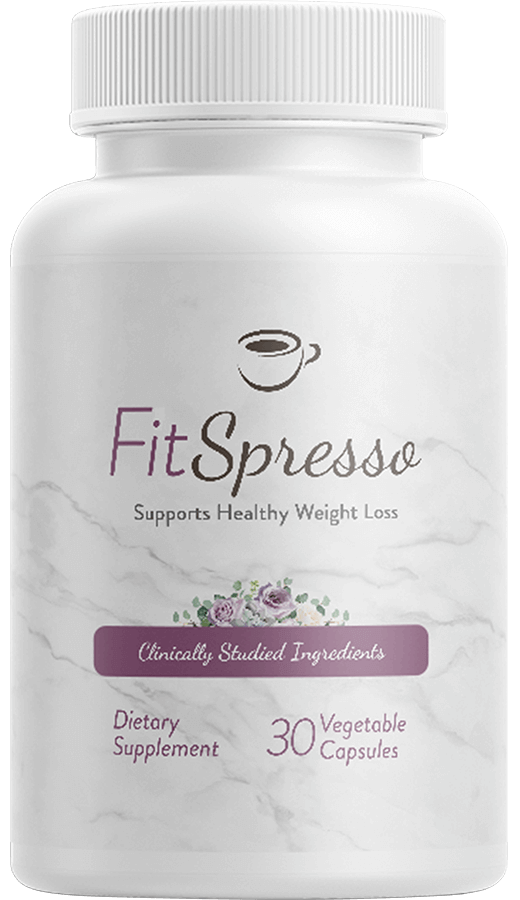
What made her willing to try it was the guarantee on their page: 60 days, money back if it doesn't work for you. "If my clock is broken for good," she said, "I'm out nothing but two months of trying."
Who I think it makes sense for: women who already love their coffee, who have done the black-coffee, cut-the-creamer, eat-less routine and watched the belly stay put. Who it isn't for: anyone who can't have caffeine, anyone pregnant or nursing, and anyone on medication who hasn't checked with their doctor first.
Bev spent forty years wasting her best cup of the day. If you'd rather not spend another forty, start with the presentation she watched with her first mug.
Find out what my friend does with her first cup →P.S. At choir practice on Wednesday, Bev showed up without her mug. I asked if she was okay. She laughed and said, "I had mine at seven, Dana. I'm done for the day." If you have a cold mug sitting next to you right now, here is where she started.
5 Morning Habits Real Women Over 40 Swear By
The small, unglamorous rituals that keep coming up in our reader stories — none of them cost more than a few dollars.
- What to do in the first 10 minutes after waking up
- The one thing to check before you reach for coffee
- A 2-minute ritual three readers mentioned, unprompted
- What "listening to your gut" actually means, medically
- The question to ask before starting anything new